Selected work
These are summaries of my projects. Full, detailed case studies are available on request.
AI insights for scorecards
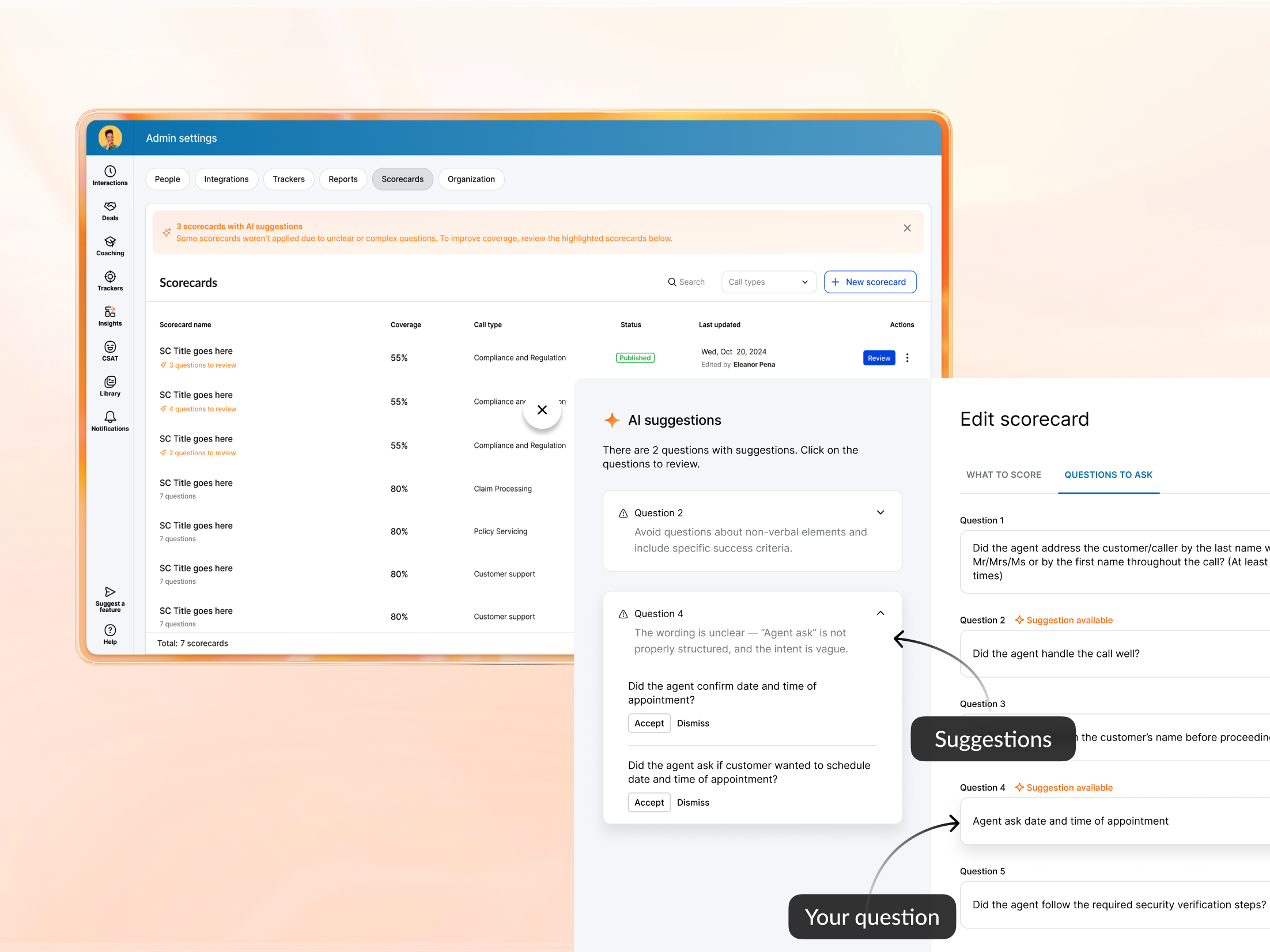
Scorecard calibration ensures consistent agent evaluations for fair feedback and compensation, but traditional methods are slow and labor-intensive.
As end-to-end design lead, I redesigned the core workflows for creating and editing scorecards, introducing guided framing to modernize them. For highly active scorecards, the experience evolves into GenAI-powered suggestions, improving consistency and calibration efficiency.
On release, the feature showed strong adoption: frequent use (10+ sessions) indicated habit formation, 2–9 uses showed sustained engagement, and AI pre-populated responses streamlined the workflow, reducing friction and boosting review frequency.
Call summary templates
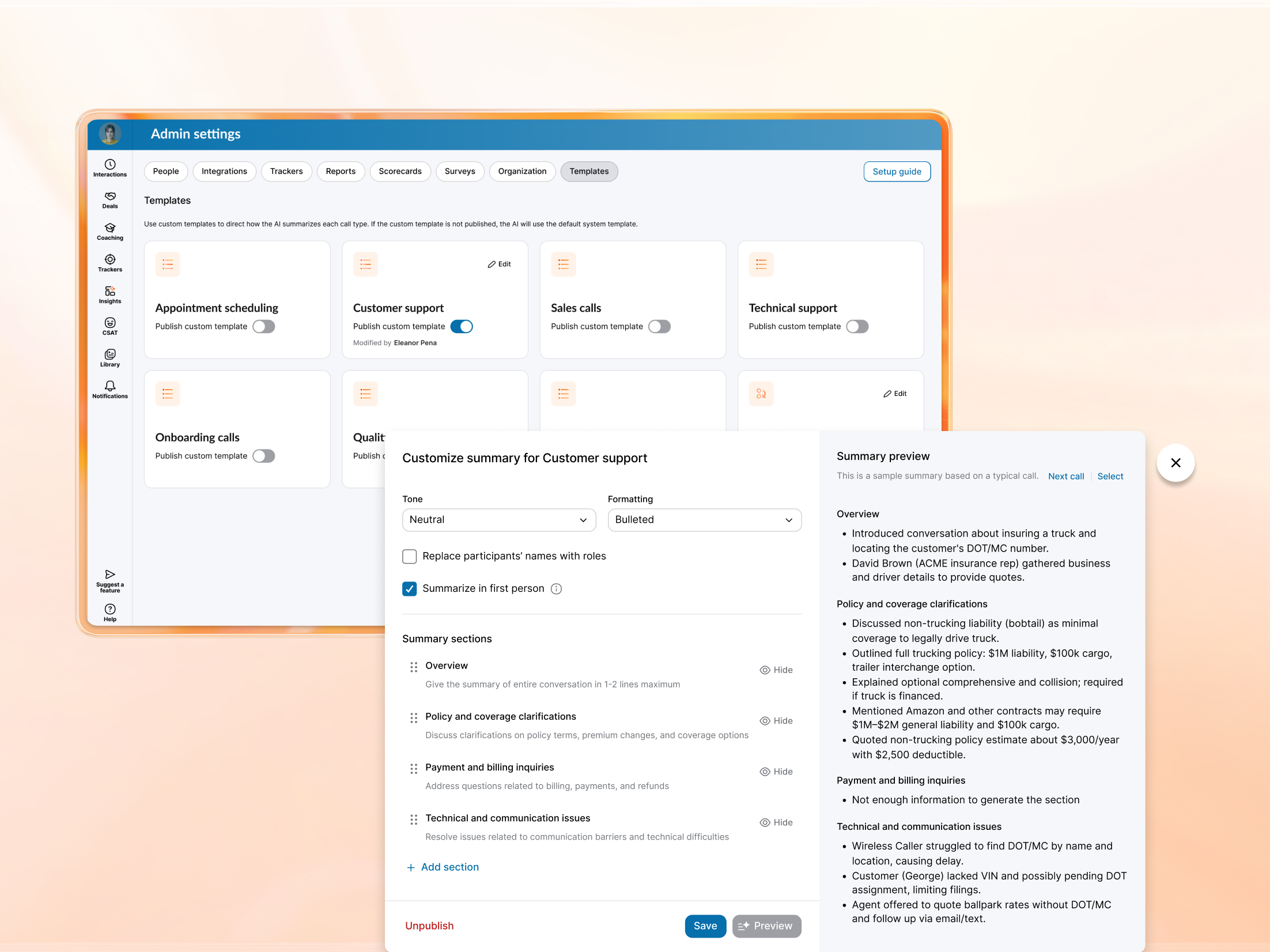
Admins and managers needed call summaries customized for key call types, and agents required follow-up emails with tailored content.
Feedback from the beta launch surfaced several usability friction points. While the functionality was there, the interface felt heavy. Users were getting bogged down in metadata and finding the template management flow a bit fragmented.
I evolved 3 key areas of the experience:
Template card information architecture simplification
Progressive disclosure of customizations followed by preview and call swap functionality
Intelligent section updates to promote reusability and keep the backend data clean

Automation for Confluence
Confluence was the first product team to platformize the Automation feature. By choosing to rebuild the existing, low-maturity experience on Forge (Atlassian’s serverless development platform), the team entered uncharted territory, designing on a new framework and an evolving UI kit. This required assessing the platform’s maturity and planning for incremental updates.
The Automation for Confluence early access program launched in May 2022 with a 55.7% rule completion rate, compared to 19.8% when Automation for Jira launched the feature in 2019. The project’s success depended on strong cross-functional collaboration across three time zones and many stakeholders, making clear communication and documentation essential. By sharing learnings through Atlassian’s internal blogging culture and running customer studies during the early access program, I helped align teams and inform the long-term roadmap for this high-impact feature.
External Collaboration
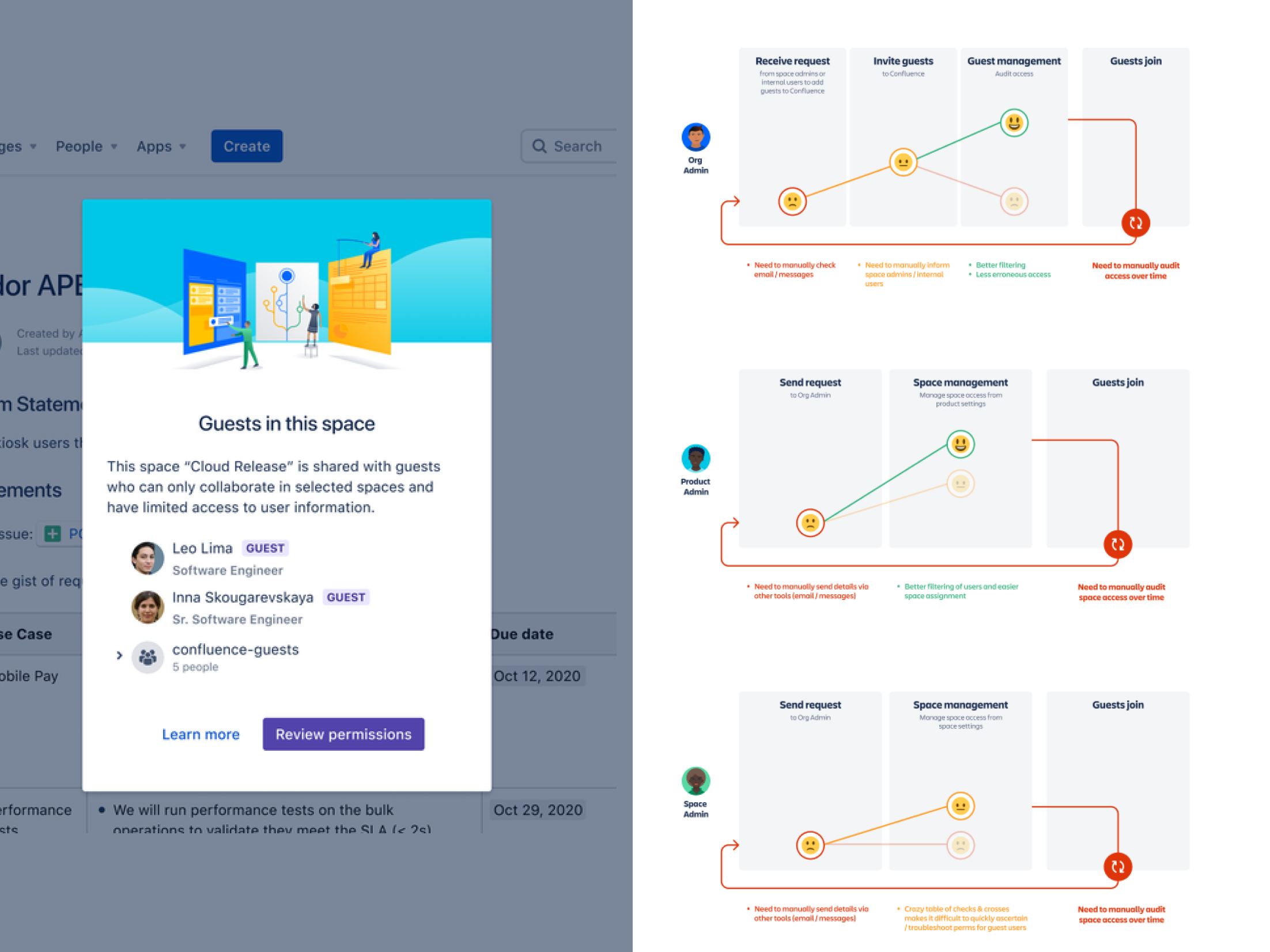
Bringing external collaborators into enterprise software safely and at scale is a common challenge. To address this, the Guests in Confluence Premium launched in June 2021 through an early access program (EAP).
The EAP’s paid licensing sparked community debate, so I researched customer pain points and created empathy journeys focused on auditing guest access. Instead of a GA version serving only ~40% of users, I advocated for license-free, single-space Guests for Beta, reaching ~90% and aligning with Atlassian’s “don’t f*ck the customer” value.
This shifted product strategy from monetization to virality. Customer feedback on licensing proved more critical than initially assumed, and the resulting principles and experience changes not only shaped the Guests Beta and GA releases but also laid the groundwork for future cross-product external collaboration features.